Государственный Русский музей
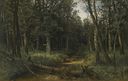
На этой картине изображён усталый крестьянин, который едет на лошади по лесной дороге. Мужчина даже задремал на своей повозке, полностью доверившись своей верной спутнице — кобыле.
Но главным «героем» картины, как и всех других картин Шишкина, остаётся, конечно же, лес. Художник безукоризненно разбирался в лесной флоре, поэтому рисовал растения с ботанической точностью. В рисунках своих учеников он замечал малейшие ошибки, вплоть до таких мелочей, как не та кора на берёзе.
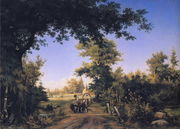
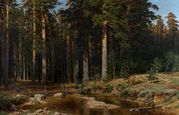
В картине «Вид в окрестностях Петербурга» Шишкин стремится передать подлинность, сходство и портретность понравившейся ему питерской природы. Это полотно выбивается из коллекции пейзажей автора тем, что мелкие детали имеют слишком подробную прорисовку контуров.
Детализация этой картины настолько точная, что является почти фотографической. Глубокая тень контрастирует с ярким солнечным пятном на открытом пространстве. В центре, на обочине дороги — остатки деревянной изгороди, за которой угадывается болото. Видны тёмная гладь воды и высокие листья рогоза. Ни один фрагмент летнего уголка природы не забыт художником, тщательно продуман и проработан уверенными движениями кисти.
"View in the vicinity of St. Petersburg", 1856
The State Russian Museum
Oil on canvas. 96 x 66.5
This picture shows a tired peasant riding a horse along a forest road. The man even dozed off on his cart, completely trusting his faithful companion-the mare.
But the main" hero " of the picture, like all other paintings by Shishkin, remains, of course, the forest. The artist was immaculately versed in the forest flora, so he painted plants with botanical accuracy. In the drawings of his students, he noticed the slightest mistakes, up to such trifles as the wrong bark on a birch tree.
In the painting "View in the vicinity of St. Petersburg" Shishkin seeks to convey the authenticity, similarity and portraiture of the St. Petersburg nature that he liked. This canvas is knocked out of the author's collection of landscapes by the fact that small details have too detailed drawing of contours.
The detail of this picture is so accurate that it is almost photographic. A deep shadow contrasts with a bright sun spot in an open space. In the center, on the side of the road — the remains of a wooden fence, behind which you can guess the swamp. The dark surface of the water and the tall leaves of the cattail are visible. Not a single fragment of a summer corner of nature is forgotten by the artist, carefully thought out and worked out with confident brush movements.



 Главная / Обратная связь
 Обратная связь
 Регистрация
 Вход
Вход Музеи
Музеи Список альбомов
 Последние добавления
 Последние комментарии
 Часто просматриваемые
 Лучшие по рейтингу
 Избранные
 Поиск картины